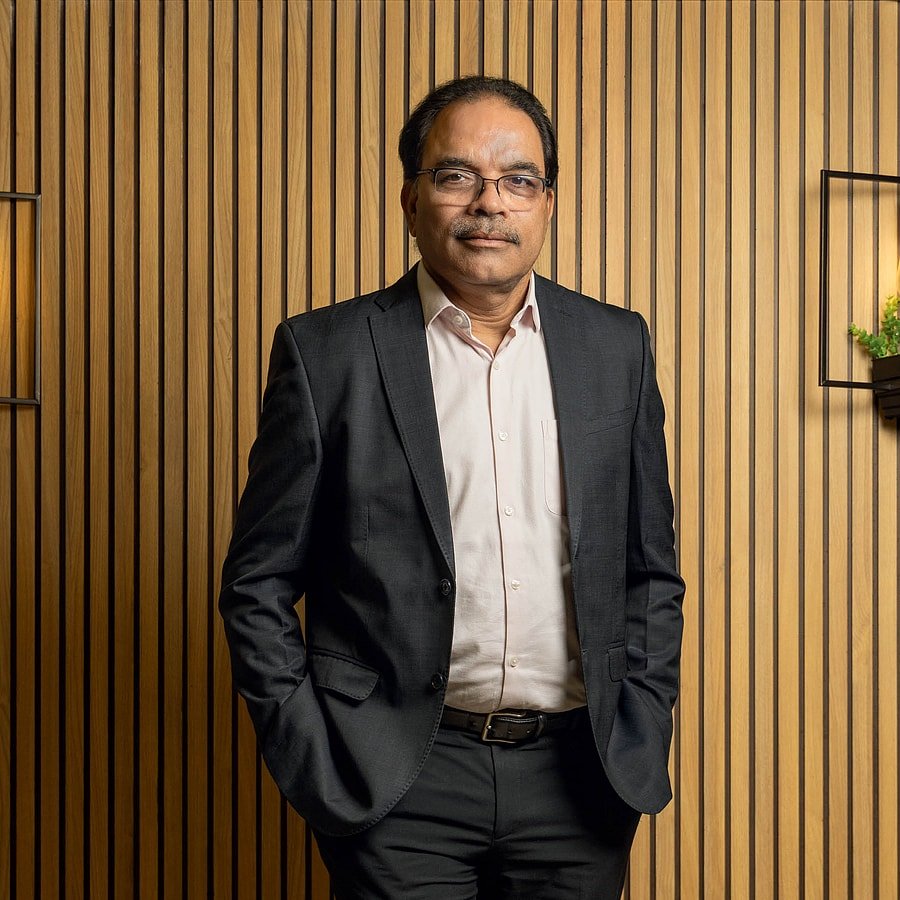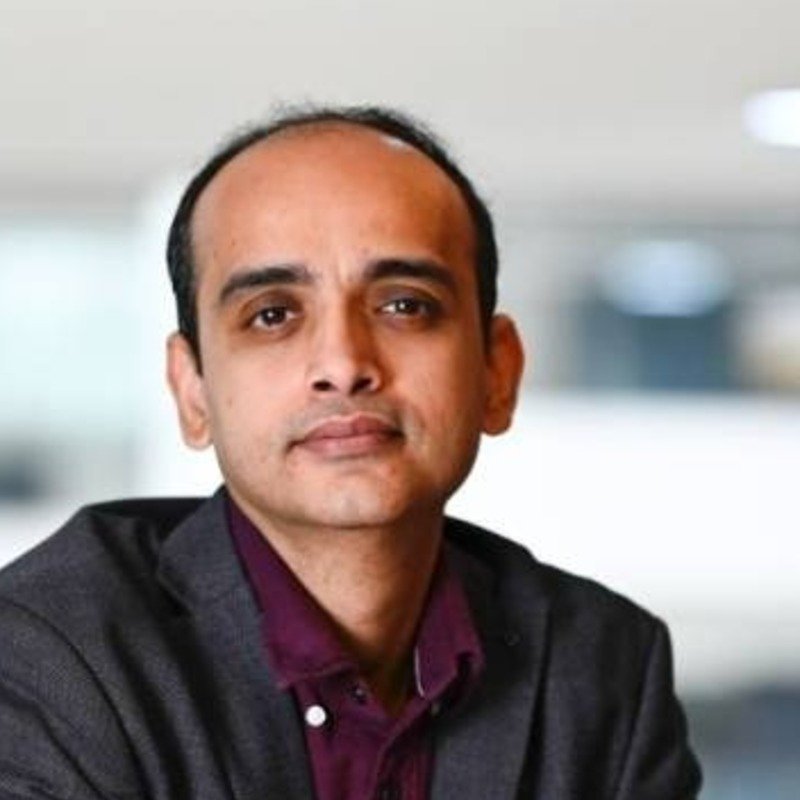
Shashwat Sharma built a reputation on admitting that Airtel was not good enough. Eight months into running Airtel, he has stopped admitting anything.
In July 2019, at a marketing conference in Gurugram, the chief marketing officer of Bharti Airtel stood in front of a room of his peers and read his own company’s manifesto out loud. The line he built the talk around was this one: “Are we the best network we could possibly be? Honestly, No.”
That is not a sentence telecom marketers say in public, and the reasoning behind it is the most useful thing on Sharma’s record. Airtel had spent the middle of the decade running challenge advertising that promised the fastest network in India, including an offer of a lifetime of free bills to anyone who found a faster one. “While all this was happening the ground reality was different, that was the biggest reality challenge we were facing,” he said. “Data prices were too low, growth was unprecedented, infrastructure couldn’t keep pace and all this led to credibility questioning.” The fix he described was to publish the company’s tower maps and signal strength down to the street where a customer lived, and then invite the complaint. “So please judge us, question us, tell us where we are going wrong.”
On 1 January 2026 that man became managing director and chief executive of Airtel India.
The Unilever import
Sharma is not a telecom lifer. He read computer engineering at Delhi College of Engineering, took a management degree at IIM Ahmedabad, and spent thirteen years at Hindustan Unilever across sales, marketing and general management, which is how Airtel itself describes the period on its corporate site. He joined Airtel in October 2018 as chief marketing and brand officer. He was running marketing and communications by July 2021, held the consumer business and the DTH company from August 2022, and became chief operating officer in October 2023. That is five years from the marketing department to the operating floor of a company with a network to run, and it is an unusual route in an industry that normally promotes its engineers and its sales chiefs.
What a brand manager does with a commodity
The habit he brought from packaged goods shows up in what he chooses to put his own name to. Two of the announcements he has made in his own words are not Airtel products at all. Perplexity Pro, which he valued at ₹17,000 a year, went free to what he described as Airtel’s 360 million customers across mobile, wifi and DTH. Adobe Express Premium went free for a year to the same base, with a public challenge to Airtel employees and customers to make something with it and tag the company.
Neither piece of software is Airtel’s. Both are somebody else’s premium product, bought in bulk and handed to a subscriber base as a reason not to switch. When the thing in the box is a commodity, a brand manager changes what is in the box. It is the cleanest expression of the instinct he carried over from Unilever, and it costs Airtel money in a market where the network itself is close to indistinguishable from the network next to it.
Then the conceding stopped
On 19 May 2026, four and a half months into the job, Airtel launched Priority Postpaid, which uses 5G standalone network slicing to reserve a guaranteed share of capacity for postpaid customers. Sharma put his name to it. “It provides a superior, more reliable, and dependable experience to our customers, whether they are attending a client call in traffic, or streaming at a packed concert, or booking a cab in a crowded market,” he said at the launch.
The response was a parliamentary committee, a Department of Telecommunications hearing, a TRAI review, a campaign by Vodafone Idea promising equal treatment to everyone, and a net neutrality argument that Airtel had already lost twice, in 2015 with Airtel Zero and in 2020 with a postpaid plan called Platinum. On 10 June the company renamed the product Fast Lane. It did not change it. “There is no question of withdrawal of our new postpaid plan,” Airtel told reporters. Its launch campaign had simply finished, the company said, and the new descriptor “captures the essence of what we offer.”
The manifesto Sharma read out in 2019 asked customers to tell Airtel where it was going wrong. Seven years later, told exactly that by two rival operators, a parliamentary panel and the campaigners who killed Airtel Zero, the company kept the product and retired the name. Both are defensible commercial decisions. Only one of them is the doctrine he has spent his career describing, and renaming a thing you cannot change is the oldest move in the marketing department he came from.
The strongest case against him is not the one being made
The serious objection to Fast Lane is not that it is unfair. It is that it has not done anything. On Vodafone Idea’s June-quarter earnings call, its chief executive Abhijit Kishore was asked whether Airtel’s fast lane was taking his premium customers. “As we speak, we don’t see that as a challenge,” he said. “The net addition for us in postpaid has been consistently positive over the past 6 to 8 quarters and it’s growing with no dip.” Airtel’s postpaid base is 30 million in a country where more than 95% of mobile subscribers are prepaid. The product that has defined Sharma’s first eight months is aimed at the smallest and most heavily contested part of the market, and the competitor it was aimed at says he cannot feel it.
The seat he actually holds
Gopal Vittal ran Airtel for thirteen years and did not leave. He became executive vice chairman on the day Sharma became chief executive, and Airtel’s own announcement is unambiguous about the arrangement: “Shashwat will report to Gopal.” Sharma is a chief executive with his predecessor one rung above him, and that predecessor holds oversight of group strategy, network strategy, technology and talent.
He can plainly operate a telecom company. He has been doing the operating job since 2023 and the numbers he inherited and now owns are good ones. The open question is what he does the first time the honest answer is an expensive one. TRAI has not concluded its technical review of network slicing, and Airtel has told the regulator that prepaid customers have felt no degradation at all. If that holds up, Sharma will have won an argument his company lost twice. If it does not, the manifesto is on the record, and so is he.
The record
Sources
- Bharti Airtel, organisation structure, confirming Shashwat Sharma as Managing Director & CEO (Airtel India) and his thirteen years at Hindustan Unilever, checked 24 August 2026
- exchange4media, BrandTalk: We analyse trends and make insightful products, 22 July 2019, carrying the manifesto and the “Honestly, No” quote in full
- exchange4media, Shashwat Sharma to move to MD & CEO role at Airtel in Jan 2026, 18 December 2025, including the reporting line
- Bharti Airtel, launch announcement for Priority Postpaid with the Sharma quote, May 2026
- ET Telecom, Airtel rebrands Priority Postpaid as Fast Lane, 10 June 2026
- Moneycontrol, Vodafone Idea sees no postpaid churn from Airtel’s 5G Fast Lane, 11 August 2026
- Communications Today, on the parliamentary committee, the TRAI review and the 2020 Platinum precedent, 31 July 2026
- Inc42, on the prepaid share of the Indian market and the campaigners’ positions, 29 May 2026
- The Hindu BusinessLine, on the postpaid base and June-quarter results, 8 August 2026
- LinkedIn, career chronology and his own posts on the Perplexity and Adobe partnerships, checked 24 August 2026
Questions people ask about Shashwat Sharma
Who is Shashwat Sharma?
Shashwat Sharma is the Managing Director and CEO of Airtel India, a role he has held since 1 January 2026. He joined Bharti Airtel in October 2018 as chief marketing and brand officer and was chief operating officer before taking the top job.
Who did Shashwat Sharma replace at Airtel?
Gopal Vittal, who ran Airtel as managing director and chief executive for thirteen years. Vittal did not leave the company. He became executive vice chairman on 1 January 2026 and Sharma reports to him.
What did Shashwat Sharma do before Airtel?
He spent thirteen years at Hindustan Unilever across sales, marketing and general management. He holds an engineering degree from Delhi College of Engineering and a postgraduate management degree from IIM Ahmedabad.
What is Airtel Fast Lane?
Fast Lane is Airtel’s postpaid service built on 5G standalone network slicing, which reserves a guaranteed share of network capacity for postpaid customers. It launched on 19 May 2026 as Priority Postpaid and was renamed on 10 June 2026 after a net neutrality backlash. Airtel has ruled out withdrawing it.