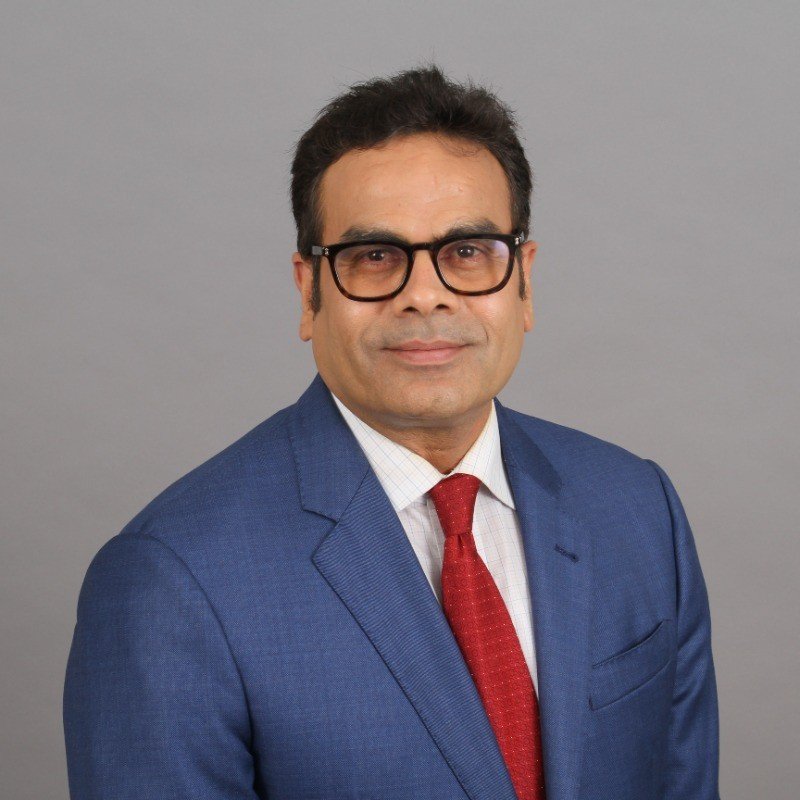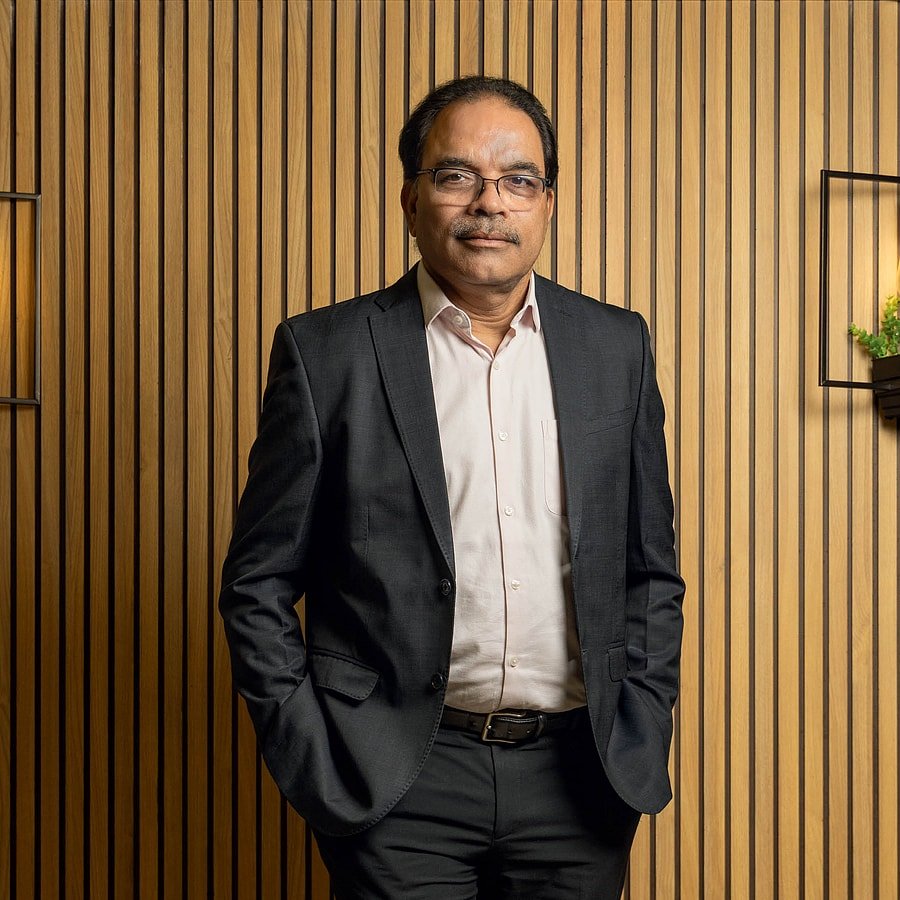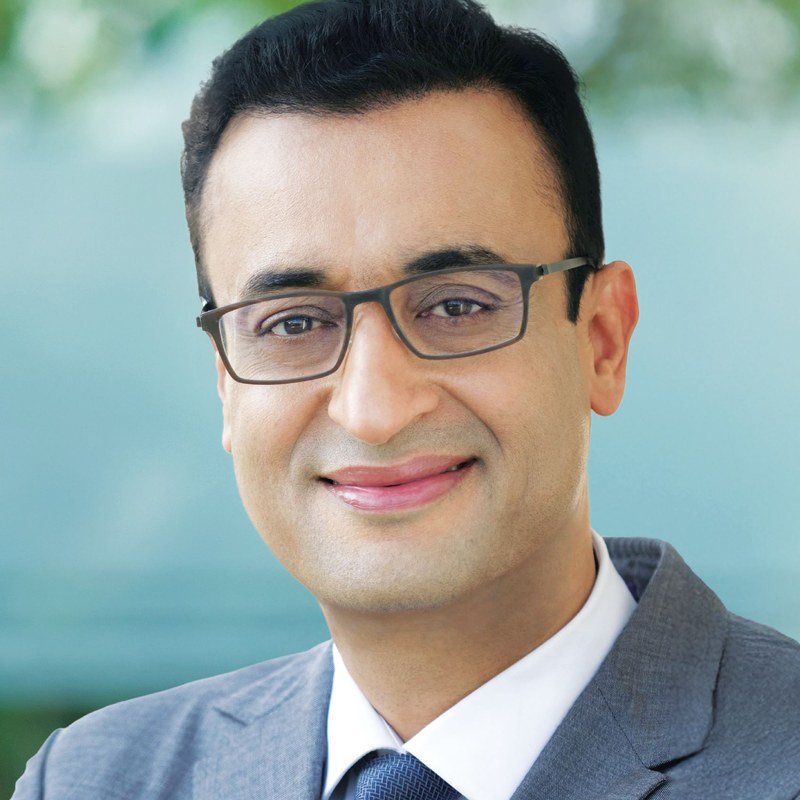
“If it didn’t work out I would have thought of flipping it a couple of years later.” That is how Abhay Soi described his first hospital to Forbes India, nine years after he took it on, while admitting that he had known very little about the hospital business when he did. The hospital was BL Kapur in Delhi’s Karol Bagh, 650 beds on five acres, on the block in 2010 after nine years of construction and heavy cost overruns. Soi, then a restructuring adviser, thought he could make a business of it if he got it at book value. He raised money from JP Morgan, and his company, Radiant Life Care, took over the operations.
Sixteen years later he is chairman and managing director of Max Healthcare, and its only promoter, holding 23.71% of the company. His own letter in this year’s annual report calls it “India’s most valuable listed healthcare organisation”. The habit underneath is the one he brought from restructuring: buy what is under-earning, and judge it by what it returns on the money put in, not by what it cost or what it is worth on paper.
He came to hospitals from the balance sheet
Soi spent six years as head of financial restructuring at Arthur Andersen, then worked at KPMG and Ernst & Young before co-founding his own firm, Halcyon, in 2004. Forbes India put it plainly: he had spent a decade turning companies around, “had seen spectacular turnarounds as well as dramatic failures”, and stepped into a business in which he had no experience.
The Delhi hospital became a platform. By 2017 Radiant also ran Nanavati Hospital in Mumbai, and that July KKR agreed to invest $200 million for 49% of Radiant. Two years later Radiant bought 49.7% of Max Healthcare, and the two were merged under the Max name. Soi became non-executive chairman on 21 June 2019 and chairman and managing director a year later.
He still talks about hospitals the way a restructuring adviser talks about assets. Asked last year how he picks acquisitions, he told Business Standard: “We target a 20-25 per cent return on capital employed within three-four years, regardless of the entry price. Even if the asset is loss-making, what matters is the Ebitda we generate over time.” When Max crossed ₹1 trillion in market value, his answer was: “We don’t chase valuation milestones.”
The latest purchase shows the method. In May 2026 Max bought 58.28% of Kalinga Hospital in Bhubaneswar for about ₹298 crore. In 2025-26 that hospital had revenue of about ₹154 crore and EBITDA of about ₹7 crore, before a change in how it provides for doubtful debts. Nobody pays that price for last year’s earnings.
The deal arrived with the lockdown
The test came almost at once. Buying into Max took him overnight from two hospitals to 17, and on the eve of the national lockdown in 2020 the combined company had ₹350 crore of EBITDA against ₹2,300 crore of debt. “We didn’t have any money in the bank,” he told Forbes India. There were “no reserves”, and “we had to come to work while everyone was mothballing.” He had taken his family from Mumbai, where he lives, to Delhi a few days before the lockdown began.
The numbers since are the argument for him. In 2025-26 the Max network reported gross revenue of ₹10,538 crore, operating EBITDA of ₹2,638 crore and 76% occupancy, and nearly 1,200 beds were added during the year. It now runs 21 facilities with more than 6,000 beds.
One of his early backers credits the sector first. Ashish Dhawan, the former private equity investor, who invested in Max when it was announced that Soi would take over, told Forbes India that Soi’s success came from three qualities. The first was being in the right sector: “if Sunil Mittal was making bicycle parts, we would never have heard of him.” The second was his big-picture vision and ability to stay focused, and the third his focus on profitable growth.
The case against
The sharpest doubt comes from one brokerage. In January, Macquarie kept an underperform rating on Max, with a target price of ₹825, raised from ₹615 but still the lowest on the Street. Its argument was that eight listed hospital chains planned to add more than 6,000 beds by March 2027, and that the new hospitals would take time to fill. At Max, the brokerage said, the profitability drag from new hospitals was already visible, and further downside to earnings estimates remained, “particularly for Max Healthcare.”
The appetite for borrowing is also growing. A year ago he said the bed expansion could be funded from about ₹6,000 crore of free cash flow over three years, “enough to fully fund our expansion without taking on additional debt.” Acquisitions are another matter. Kalinga was funded through an external commercial borrowing, and net debt rose from ₹1,908 crore at the end of March to ₹2,384 crore at the end of June. On the August earnings call he told analysts that net debt was still below one times EBITDA, and that “if we can get to 2.5x by doing acquisitions or whatever else, we would be happy to go to 2.5x net debt-to-EBITDA.” The annual report sets that as the ceiling.
His own pay sits in the same annual report. Max records his remuneration for 2025-26 as 627.45 times that of the company’s median employee, in a year when he waived his entire variable payout.
On pay: his entry in our FY26 CEO pay table.
What he is building now
His letter in the annual report sets out an ambition of “nearly doubling bed capacity over the next five years”, and the report puts the pipeline at more than 8,300 beds, about 4,000 of them over the next three to four years. In August he told analysts that the board had given in-principle approval to enter medical education: “We believe this to be a significant line of business in years to come.”
Every one of those beds will be judged against his own test, the return on capital within three or four years regardless of the entry price. That test was easy to pass when he was taking over a stalled hospital he hoped to get at book value. The question for the next five years is whether it still holds as Max buys more, in a market Macquarie thought in January was adding beds faster than patients could fill them, and with more of it paid for with borrowed money.
The record
Sources
- Max Healthcare Institute, Integrated Annual Report 2025-26 (CMD letter, operating highlights, remuneration of directors, Annexure on median remuneration, shareholding notes)
- Max Healthcare Institute, Notice of the Annual General Meeting 2022 (appointment history and reappointment)
- Max Healthcare Institute, Earnings Update Q1 FY2027 (Kalinga Hospital acquisition), 13 August 2026
- Max Healthcare Institute, Q1 FY2027 earnings call transcript, 14 August 2026
- Max Healthcare, About us, checked 15 October 2026
- Forbes India, Abhay Soi: Health care’s new czar, 7 November 2019
- Forbes India, How Abhay Soi acquired and made Max Healthcare India’s second largest hospital chain, 30 March 2023
- The Times of India (PTI), KKR picks up 49% in Abhay Soi-run Radiant Life Care for $200m, 19 July 2017
- Business Standard, Anjali Singh, Max Healthcare’s 10,000-bed expansion built with zero debt: MD Abhay Soi, 28 October 2025
- CNBC-TV18, Meghna Sen, Apollo Hospitals, Max Health may see further earnings downgrades, bearish Macquarie warns, 9 January 2026
- Forbes, Abhay Soi profile, real-time net worth, checked 15 October 2026
- NDTV Profit, Divya Prata, Hospital Stocks On Life Support Through 2026 As Expansion Outpaces Absorption: Macquarie, 9 January 2026
- Abhay Soi, LinkedIn profile, career and education record, checked 15 October 2026
Questions people ask about Abhay Soi
Who is Abhay Soi?
Abhay Soi is Chairman and Managing Director of Max Healthcare Institute, one of India’s largest hospital companies. He became its chairman in June 2019, after his company Radiant Life Care bought 49.7% of Max Healthcare, and its managing director in June 2020.
What is Abhay Soi's salary?
Max Healthcare’s annual report for 2025-26 gives his remuneration as ₹27,37,71,228, made up of ₹27,37,31,628 in fixed pay and ₹39,600 in perquisites. He voluntarily waived his variable pay for the year. During the year he was also paid ₹8,56,92,526 of variable pay for 2024-25.
How much of Max Healthcare does Abhay Soi own?
He held 23,07,17,699 shares, or 23.71% of the company, at 31 March 2026, and is its only promoter, according to the annual report. Forbes estimated his net worth at $2 billion on 15 October 2026.
What did Abhay Soi do before healthcare?
He was head of financial restructuring at Arthur Andersen from 1996 to 2002, worked at KPMG and Ernst & Young, and co-founded Halcyon Resources and Management. He studied at St Stephen’s College, Delhi, and took an MBA from European University.
How big is Max Healthcare?
Its annual report for 2025-26 describes a network of 21 healthcare facilities with more than 6,000 beds, and reports network gross revenue of ₹10,538 crore for the year, with occupancy of 76%.