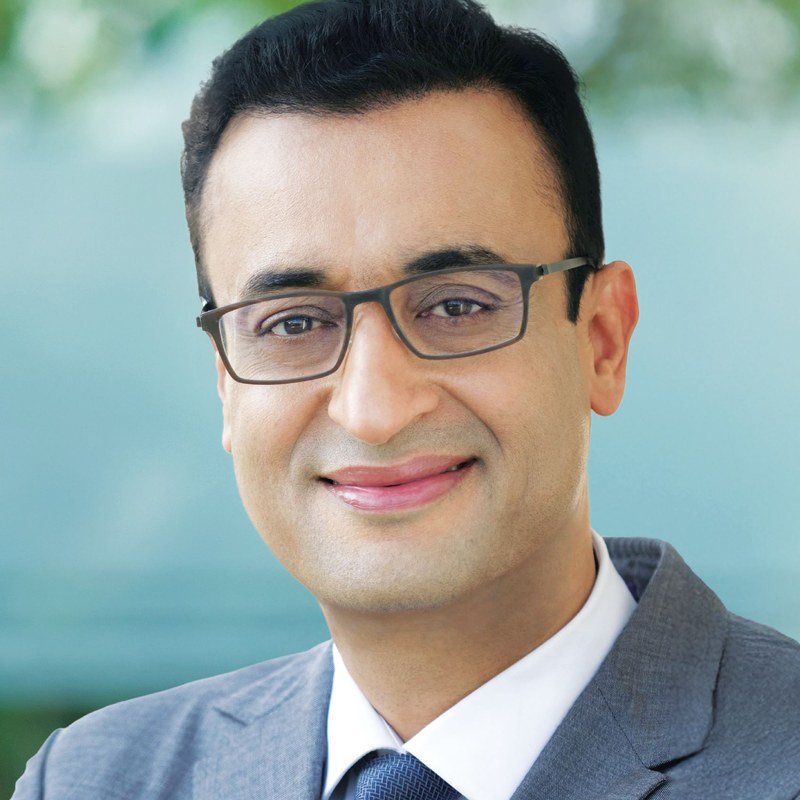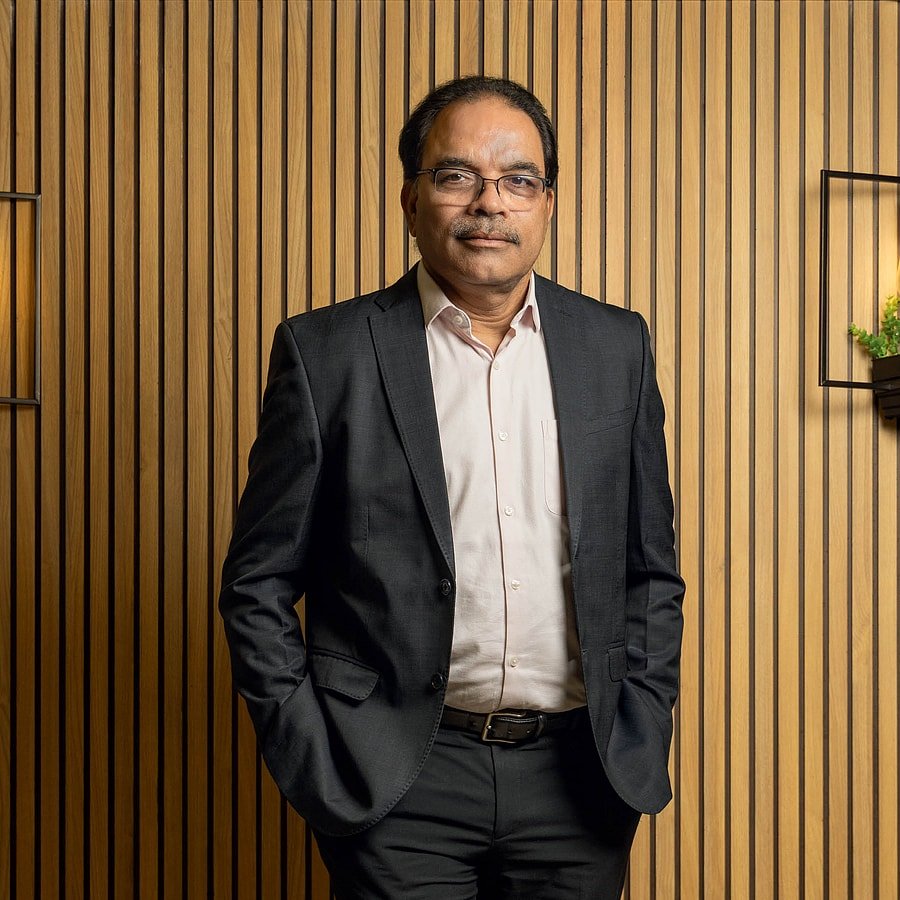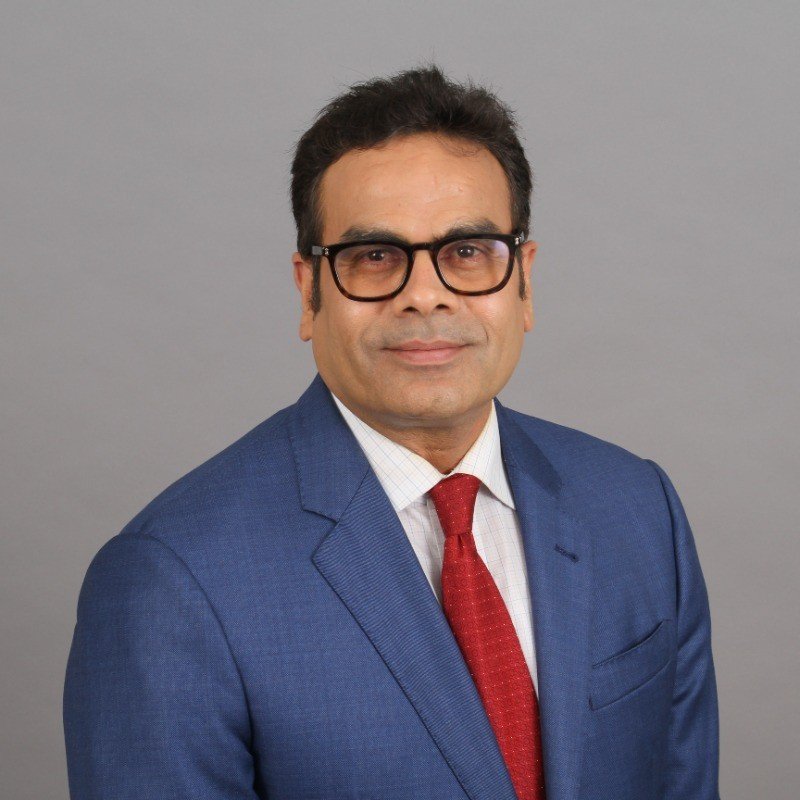
“He’s an uncomplicated guy, focused on what needs to be done.” That was how Nandan Nilekani, the chairman of Infosys, described the man the board had just chosen to run it, at a press conference on 23 July 2026, in a year when nearly everything else said about Indian IT services was complicated.
Ashiss Kumar Dash has worked for one company since May 1995, when he joined Infosys as a software engineer after a single year as a process engineer at Indian Aluminium Company. Infosys’s board made him CEO designate that day, to take over from Salil Parekh on 1 April 2027 and stay until 31 March 2032. In the same results announcement Infosys narrowed its growth forecast for the year to 1.5 to 3 per cent in constant currency, below the 2.5 to 4.5 per cent analysts had expected, and its US-listed shares fell 5 per cent in early trading.
The last time Infosys chose a chief executive, it hired from outside. Parekh took over in January 2018, after the acrimonious exit of Vishal Sikka, and by 2026 had become the longest-serving chief executive in the company’s history who was not one of its founders. This time the board stayed inside the building, at a moment when artificial intelligence is pressing on the business model of every large Indian IT services firm.
He has worked in nearly every room at Infosys
Nilekani’s account of him on the earnings call that evening was a tour of the company. Dash “joined as a software engineer from IIT Kharagpur”, he said, had worked in delivery, in account management and in sales, and “has been involved in starting a DC in Bhubaneswar”. His own record fills in the rungs. He studied chemical engineering at IIT Kharagpur, graduating in 1994, and spent his first eight years at Infosys writing and then running software projects. He became an account manager in 2003 and an engagement manager in 2005. In December 2014 he was made a vice-president and regional head for resources and utilities in the Americas, and the titles came faster after that: industry head in 2016, segment head in 2019, executive vice-president in 2021.
By the time of his promotion his title had grown to five nouns: executive vice-president and global head of services, utilities, resources, energy and enterprise sustainability. Infosys reports that business as Energy, Utilities, Resources and Services, and it brought in 13.4 per cent of a $5.08 billion quarter. He is a director of two wholly owned subsidiaries, Infosys Public Services and MRE Consulting, and a trustee of Infosys Foundation USA. He lives in Los Angeles, “a city I call home“, as he wrote in May, and is expected to be based in Bengaluru when he takes charge.
The first reason for the cut came from his own segment
The quarter that carried his promotion was a soft one, and part of the reason sat inside the business he ran. Infosys’s chief financial officer, Jayesh Sanghrajka, told analysts that revenue growth was lower than expected “mainly due to” a “one-off 50 basis point impact on account of program termination by an EURS client during the quarter”, which “was not factored in the earlier guidance”. Explaining the cut to the full-year forecast, he began with the same client: “first of all, one-off that we had in one of the EURS client”. Asked for context, he said only that it was “a client, which has terminated a project in the EURS vertical.”
The segment’s own figure carries the mark. Energy, Utilities, Resources and Services grew 1.3 per cent year on year in constant currency, against 2.4 per cent for Infosys as a whole, and its share of company revenue slipped from 13.6 per cent a year earlier to 13.4 per cent. Mint called it the company’s weakest June quarter in six years.
Infosys’s answer is that one terminated programme is a one-off, and the same call made that case in detail. Sanghrajka said the segment’s growth, adjusted for the termination, “was strong”, and that financial services and EURS “are expected to grow higher than the company average” for the year. EURS also accounted for four of the 22 large deals Infosys signed in the quarter. Parekh called the portfolio Dash built “exceptional on the growth dimension”. A week before the results, a BNP Paribas note had picked out “strong growth in BFSI and EURS verticals” as a sign of resilience in the business. And the company average his segment trailed was itself helped by acquisitions, which Sanghrajka said contributed about 1.1 per cent of sequential growth.
A company that sells effort promoted its most experienced seller
The strongest case against the appointment is not about Dash at all. It is that an industry whose product is skilled people’s time is being repriced by software that does some of that work, and Infosys has answered by promoting the executive most thoroughly formed by the old model. Shubham Dalia, lead IT analyst at Nirmal Bang Institutional Equities, read the quarter as evidence of exactly that pressure: “There will be pricing pressure and Infosys pulling down the upper end of its guidance in a historically strong quarter is proof of the AI impact on growth.” Headcount fell by 532 in the quarter to 328,062, while AI services rose to 8.2 per cent of revenue.
Phil Fersht, chief executive of HFS Research, described the same choice more kindly, and with the same adjective a sceptic would use: “a safe, execution-focused appointment at a time when Infosys needs stability as much as transformation.” He added that Dash “understands the firm’s culture, clients, and delivery engine”.
Dash has given his own answer in public, and it is more specific than anything in the company’s announcement. Writing in May after an Infosys leadership gathering in Los Angeles, he set out what the shift meant “for Infosys”: “Shifting from effort-based to outcome-driven engagements” and “Leading with business impact, not just technology.” The shift “isn’t aspirational”, he wrote, and was “already driving how we win and grow”. It is a seller’s promise, and it commits him to the one change his critics doubt an insider can make, which is to stop charging for the hours.
The week before, he was hosting clients and finishing a course
The two posts Dash published in the days before Infosys announced him show where his time goes. On 21 July he wrote about hosting clients for Infosys at both Wimbledon finals, with the former world No. 1s Martina Hingis and Jim Courier as guests. On 22 July, a day before his appointment, he announced that he had graduated from the Senior Executive Programme at London Business School, which he had attended since March, and where he presented a session to his classmates on “Leadership in the Agentic Era”. Leadership, he wrote, was about “asking better questions” rather than “having all the answers”.
More preparation is built into the handover. Nilekani told analysts that for the “Next 2-3 months” Dash would “focus on getting more coaching and training on being a CEO”, and then spend six months “as a mentee under Salil’s leadership, who will groom him for the complex job of managing a $20 bn company”. Reuters reported that the mentoring was due to begin in October. A man who has spent 31 years inside Infosys is being given nine months of formal instruction in how to run it.
Five years, and a forecast of his own
Dash takes charge on 1 April 2027, and the first full-year forecast issued on his watch will cover the year to March 2028. The last forecast of the Parekh era was set in April 2026 at 1.5 to 3.5 per cent and narrowed to 1.5 to 3 per cent on the day Dash was named, with a client in his own segment the first reason given. His own stated plan is to move Infosys from effort-based to outcome-driven work. The five years will show whether the executive who knows the effort business best can be the one who changes what Infosys charges for.
On pay: what Salil Parekh’s FY26 pay shows about how Infosys counts stock units.
The record
Sources
- Infosys, press release, Infosys Board Appoints Ashiss Kumar Dash as CEO Designate, 23 July 2026
- Infosys, management profile, Ashiss Kumar Dash, CEO Designate, checked 8 October 2026
- Infosys, Q1 FY27 earnings conference call transcript, 23 July 2026, including remarks by Nandan Nilekani, Salil Parekh and Jayesh Sanghrajka
- Infosys, Q1 FY27 fact sheet, revenues by business segment, 23 July 2026
- Reuters, via Yahoo Finance, Sai Ishwarbharath B and Haripriya Suresh, Infosys names insider Ashiss Kumar Dash next CEO, trims growth forecast, 23 July 2026
- Livemint, Jas Bardia, Infosys clocks weakest Q1 in six years, picks Dash for CEO, 23 July 2026
- Rediff (PTI), Infosys Veteran Ashiss Kumar Dash Appointed CEO Designate, Succeeding Salil Parekh in 2027, 23 July 2026
- The Hindu BusinessLine, Infosys Q1FY27 preview: Sequential growth likely to be aided by acquisitions, 19 July 2026, including the BNP Paribas note
- LinkedIn, Ashiss Kumar Dash, career and education record, checked 8 October 2026
- LinkedIn, Ashiss Kumar Dash, post on Infosys Connect 2026 in Los Angeles, 27 May 2026
- LinkedIn, Ashiss Kumar Dash, post on hosting clients at Wimbledon, 21 July 2026
- LinkedIn, Ashiss Kumar Dash, post on graduating from the London Business School Senior Executive Programme, 22 July 2026
Questions people ask about Ashiss Kumar Dash
Who is Ashiss Kumar Dash?
Ashiss Kumar Dash is CEO Designate of Infosys. The board appointed him on 23 July 2026 to succeed Salil Parekh as Managing Director and Chief Executive Officer on 1 April 2027, for a five-year term running to 31 March 2032. He has worked at Infosys since May 1995.
When does Ashiss Kumar Dash become Infosys CEO?
On 1 April 2027, when Salil Parekh’s second term ends. Infosys chairman Nandan Nilekani said Dash would spend two to three months on coaching and training, then six months as a mentee under Parekh.
What did Ashiss Kumar Dash do before becoming CEO Designate?
He was executive vice-president and global head of services, utilities, resources, energy and enterprise sustainability, the portfolio Infosys reports as Energy, Utilities, Resources and Services. He joined Infosys in 1995 as a software engineer and worked in delivery, account management and sales.
How did Ashiss Kumar Dash's segment perform before his promotion?
In the June 2026 quarter, Energy, Utilities, Resources and Services grew 1.3% year on year in constant currency, against 2.4% for Infosys overall, after a client terminated a programme. Infosys said the segment’s growth was strong once adjusted for that termination, and expected it to grow faster than the company average for the year.
Where did Ashiss Kumar Dash study?
He holds a BTech in chemical engineering from IIT Kharagpur, and has completed Stanford University’s Global Leadership Program and the Senior Executive Programme at London Business School.
What is Ashiss Kumar Dash's salary?
Infosys’s annual report for FY26 lists his remuneration as ₹17,30,61,049, earned as segment head for energy, utilities, resources and services, before he was named CEO designate. Infosys says the figure includes the value of stock incentives exercised during the year. Source: Infosys annual report FY26.