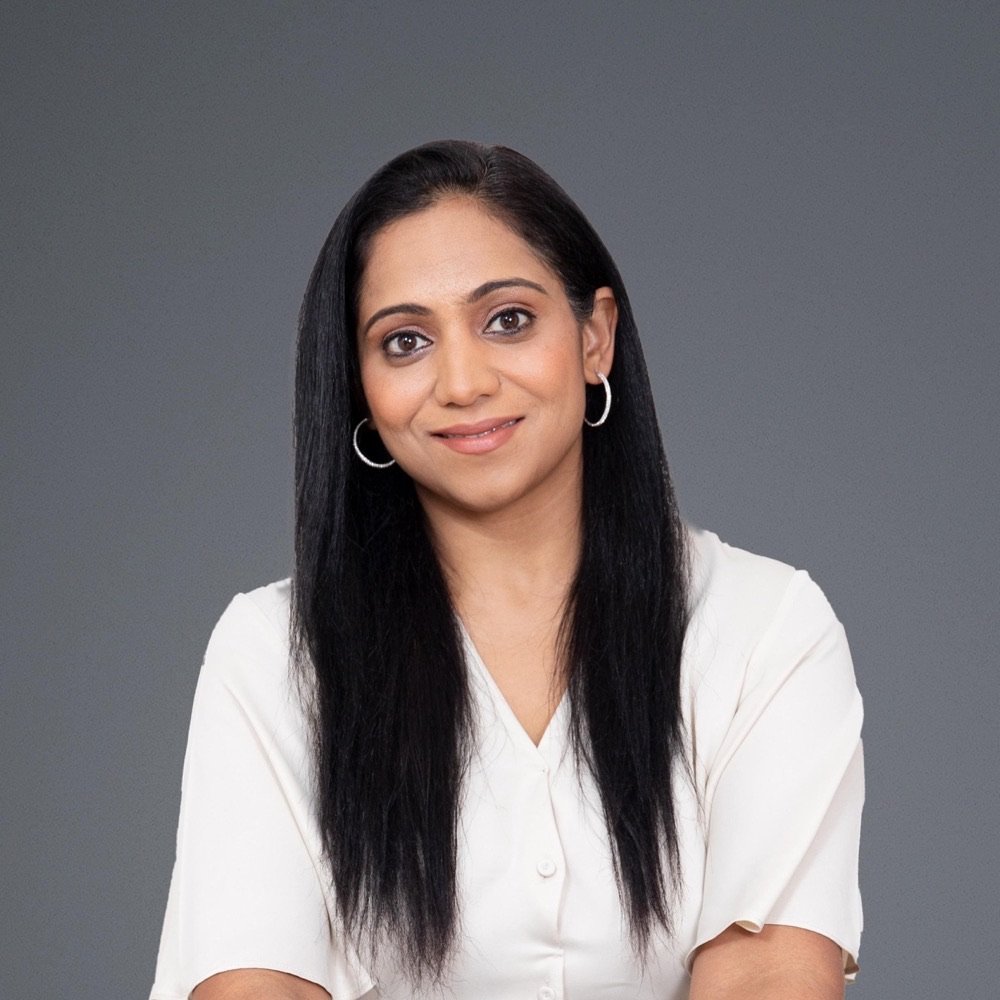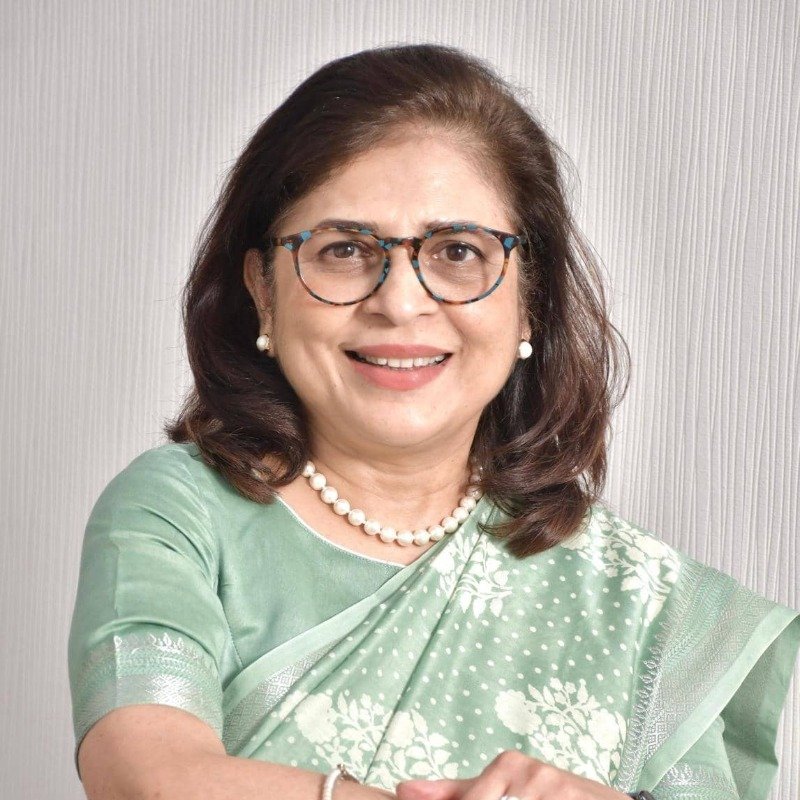
Revathi Advaithi’s first job in the country she now runs a company from was supervising a factory floor in Shawnee, Oklahoma. She had a mechanical engineering degree from a college in Rajasthan, a green card through a sister living in the state, and a master’s degree she has since called not worth much. Eaton hired her anyway, into its hydraulics business. She spent the next three decades doing the unglamorous work of running physical things: electrical distribution units, manufacturing plants, supply chains across three continents.
In February 2019, Flex made her CEO. In May 2026, having taken the company into the S&P 500 for the first time in its history, she announced she would split it into two public companies and run the half betting most directly on the AI infrastructure boom.
The company that hired her twice
Advaithi left Eaton in 2002 for six years at Honeywell, in aerospace and then oil and gas operations. In 2008 she went back to Eaton, this time rising through it: president of the Asia Pacific electrical business from 2009, the Americas region from 2012, and by 2015 chief operating officer of the entire electrical sector. Flex hired her out of that seat in February 2019, succeeding Mike McNamara, to run a company most consumers have never heard of despite it manufacturing a large share of the electronics they use, from data center hardware to the products of brands that never put their own name on the factory.
She has been direct about what she thinks that experience is worth in India specifically, where Flex has operated since 2001 and where Cisco is now its largest client. “If India wants to genuinely be China plus one, it has to demonstrate end-to-end cost advantage, not just what’s made here, but the entire supply chain,” she told Fortune India in May 2026. “You can’t just be bringing components in and assembling them.”
The split investors cheered before they had the numbers
On 5 May 2026, Flex announced it would spin off its Cloud and Power Infrastructure business, the unit building power and thermal systems for AI data centers, into a standalone public company that Advaithi will run. The stock jumped roughly 30% the next day. What Reuters noted at the time is easy to miss inside that enthusiasm: Flex “did not disclose financial information for the unit to be spun off, including its revenue, profit margins or debt allocation, nor did it specify the stake it would retain in the new company.” Investors bought the story before they saw the balance sheet.
Three months later, the enthusiasm had cooled slightly rather than reversed. JPMorgan’s Joseph Cardoso kept his Overweight rating after the company’s first-quarter fiscal 2027 results in late July but cut his price target from $175 to $160. A market summary of that same earnings report was headlined, plainly, “market reacts cautiously.” None of this is a verdict against her. The point is narrower: the growth numbers driving her new company’s valuation, 65 to 75% revenue growth targeted for fiscal 2027, accelerating further in 2028, are targets Flex has stated, not yet numbers SpinCo has filed as an independent company.
The AI re-rating is also worth setting against the years that preceded it. For most of her tenure, Flex’s growth was, by one independent research firm’s description in January 2026, “a sluggish 2.7%” five-year revenue compound rate, with free cash flow margins it called “subpar.” The company has also recorded restructuring charges, mostly severance, in every year of her time as CEO, including $175 million in fiscal 2024 alone, and cut 335 jobs at an Illinois facility seven months into her tenure. The AI infrastructure bet is a real second act. It followed several years that were not, by the numbers, an obviously good first one.
The year she did not take off
In 2023, on a trip to India, Advaithi found a lump. It was stage two breast cancer. “My first reaction was, maybe I should quit and focus on my health,” she has said. Her board chairman told her not to make any decisions yet: “You at 50% is better than nothing at all.” Her husband told her the family didn’t need her fully focused on the diagnosis, they needed her distracted from it. She wrote later, in a TIME op-ed under her own name, about scheduling chemotherapy around earnings calls: “I still recall the week I underwent chemotherapy on a Friday and endured the lingering side effects as I prepared for an earnings call on Wednesday.” She did not miss a day of work. Flex had a record year.
She has since been declared cancer-free. The story is now part of how she talks about the job in public, not a fact someone else surfaced. Whether the same instinct, keep moving, treat the hard thing as something to work through rather than around, is the right instinct for launching a brand-new public company with unfiled numbers into a market that is currently pricing AI infrastructure as if the growth is guaranteed, is the bet the next eighteen months will settle.
The record
Sources
- Fortune India, on her early career and India manufacturing views, 16 May 2026
- Flex investor relations, CEO appointment announcement, 11 February 2019
- Flex investor relations, spin-off announcement, 5 May 2026
- Reuters, on the undisclosed SpinCo financials, 5 May 2026
- Flex investor relations, S&P 500 inclusion, 9 June 2026
- StockStory, via Finviz, on Flex’s pre-2026 growth and cash flow record, 13 January 2026
- Flex FY2026 Form 10-K, SEC EDGAR, revenue, employees and restructuring charges
- TIME, her own account of working through cancer treatment, 11 March 2026
- South Asian Trailblazers, podcast interview, 24 March 2026
- LinkedIn, role history, checked 19 August 2026
Questions people ask about Revathi Advaithi
Who is Revathi Advaithi?
Revathi Advaithi is the CEO of Flex, a role she has held since February 2019. In May 2026 she announced Flex would split into two public companies, and she will lead the new AI-infrastructure-focused company, SpinCo, once the split completes.
What is Flex's SpinCo?
SpinCo is the planned independent public company that will hold Flex’s Cloud and Power Infrastructure business, building power and thermal systems for AI data centers. The spin-off was announced 5 May 2026 and is targeted to complete in the first calendar quarter of 2027, with Revathi Advaithi as CEO.
What did Revathi Advaithi do before Flex?
She spent most of her career at Eaton, starting as a shop-floor supervisor in Oklahoma, leaving for six years at Honeywell from 2002, then returning to Eaton in 2008 and rising to Chief Operating Officer of its electrical sector by 2015.
What is Revathi Advaithi's educational background?
A BS in Mechanical Engineering from BITS Pilani in India, and an MBA from the Thunderbird School of Global Management in the US.
Did Revathi Advaithi have cancer?
Yes. She has spoken publicly, including in a TIME op-ed under her own name, about being diagnosed with stage two breast cancer in 2023 and continuing to run Flex through treatment. She has since been declared cancer-free.
When did Flex join the S&P 500?
Flex joined the S&P 500 index for the first time on 22 June 2026.
What is Revathi Advaithi's salary?
Flex’s proxy statement filed in June 2026 shows her total compensation for fiscal 2026 as $44,391,138, including a salary of $1,325,000 and stock awards of $38,446,348. It shows she beneficially owned 1,302,928 Flex shares on 1 June 2026. Source: Flex proxy statement.