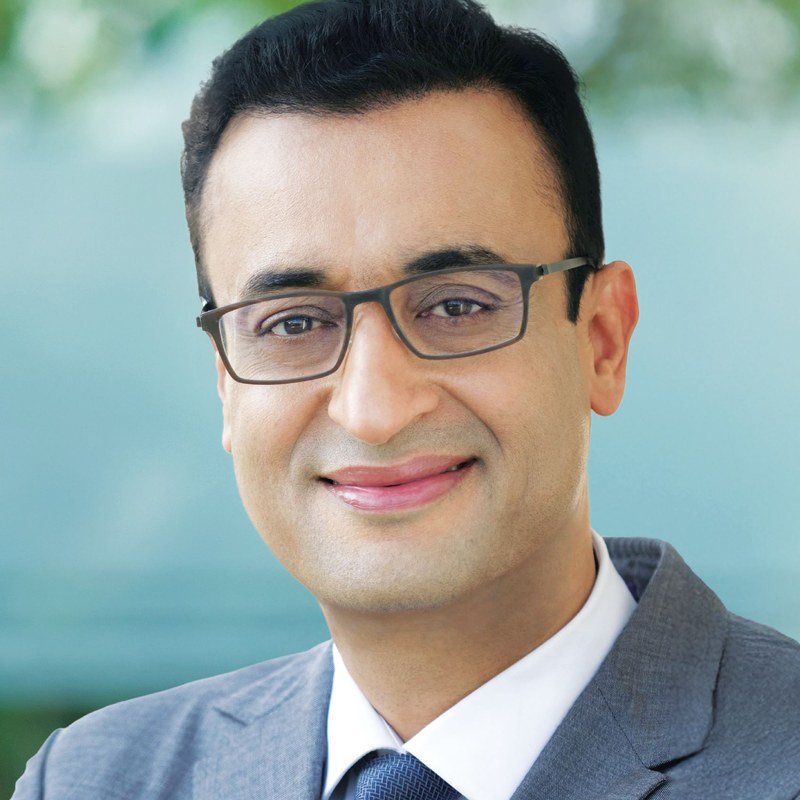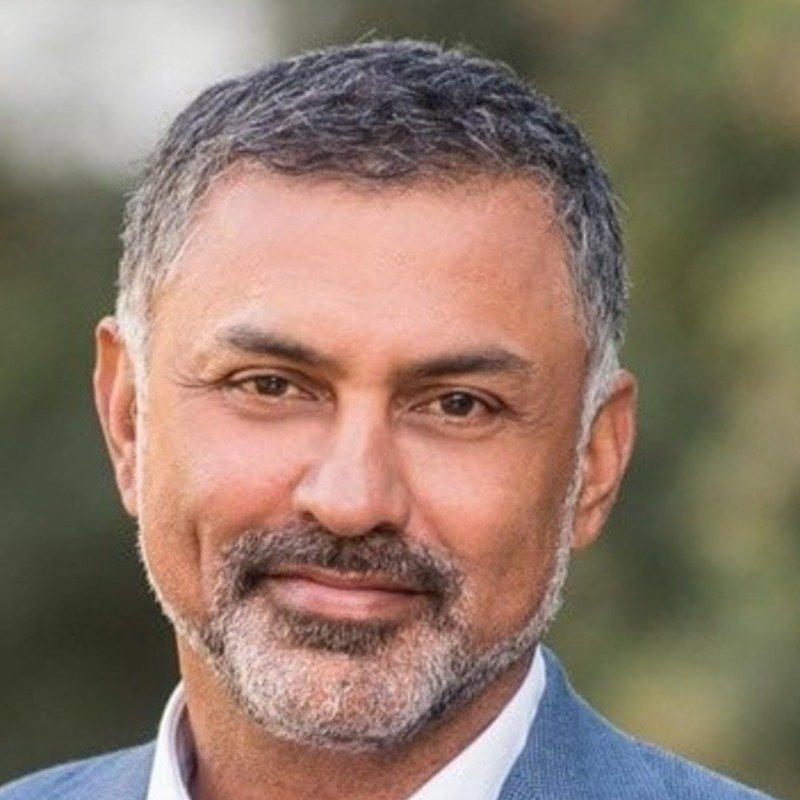
Nikesh Arora has been one of the highest-paid executives in his industry twice, first at Google, then at SoftBank, and the number has followed him into nearly every profile written about him since. At SoftBank he was Masayoshi Son’s publicly anointed successor until a group of shareholders accused him, through lawyers, of undisclosed conflicts of interest. A board committee ccleared him five months later. He resigned anyway, and told the internet in two words: “clean chit.”
Two years after that, in June 2018, he took the top job at a company most people outside cybersecurity had never heard of. Palo Alto Networks was worth about $19 billion then. It is worth somewhere between $290 and $313 billion now, depending on the week.
The dealmaker before the deals
Arora’s path to any of this started at IIT Banaras Hindu University, an electrical engineering degree, and a short stint at Wipro he left almost immediately for graduate school in the US. He worked in finance at Fidelity and Putnam before Deutsche Telekom put him in charge of a 3G subsidiary that became T-Mobile’s international marketing arm. Google hired him in 2004, months after its IPO, and by January 2011 he was Chief Business Officer, running the advertising and business-development machine that funded almost everything else the company did. He left in July 2014 for SoftBank, first running its internet and media arm, then rising to President and Chief Operating Officer within months, the role Son had described as a path to the top job.
He did not get there. In January 2016, a group of SoftBank shareholders, working through the law firm Boies Schiller Flexner, sent the board an eleven-page letter alleging conflicts of interest: a paid advisory role at private equity firm Silver Lake he had held since 2007, a personal stake he took in Indian e-commerce firm Snapdeal alongside a SoftBank-led investment in the same company, and questions about how he financed a $483 million personal purchase of SoftBank stock in 2015. A special committee of independent SoftBank directors, using outside counsel, concluded in June 2016 that the claims were “without merit.” Arora resigned the next day. Son said, separately, that he had decided to stay on as CEO another five to ten years rather than hand over the company as planned. A Financial Times report two years later suggested the original shareholder campaign may have had less to do with genuine concern and more to do with internal rivalry inside SoftBank. A Wall Street Journal investigation went further in February 2020, reporting that Misra, who became SoftBank’s chief dealmaker within months of Arora’s exit, had paid an Italian businessman, Alessandro Benedetti, to compile a dossier and plant negative stories about Arora and another internal rival. Misra denied it through a SoftBank spokesperson, calling the claims “a series of falsehoods that have been consistently denied.”
The pay package shareholders keep voting down anyway
At Palo Alto Networks, the argument that follows Arora is not about conflicts, it is about price. Shareholders have voted against the company’s executive pay package seven times since 2015, more rejections than any other company in the S&P 500. In December 2025, less than half backed a package worth nearly $100 million. Institutional Shareholder Services has recommended against the pay in eight of the last eleven years, warning of “unmitigated pay-for-performance misalignment” and target compensation “nearly twice” that of peer CEOs. Michael McCauley of the Florida State Board of Administration has called the link between pay and shareholder returns “weak,” citing “insufficiently challenging goals.” Compensation consultant Brian Bueno of Farient Advisors called the structure’s payout ceiling, four times target, “very unusual” against an industry-standard cap of two.
Palo Alto Networks’ own board has answered every one of those votes the same way: Arora, it says, is “a world-class, exceptionally talented CEO whose focus and interests fully align with those of our shareholders,” and the stock has added more than $100 billion in market value since he arrived. Both things are true at once. The shareholders keep voting no. The board keeps paying him anyway, and the stock keeps justifying it, for now.
What he is actually building
The word Arora uses most about his own strategy is “platformization”, forcing customers off a patchwork of separate security tools and onto one Palo Alto system. “It’s like a one-way street,” he told CNBC in 2024. “Once you come this way, there’s no going back.” In July 2025 he tested that thesis at its largest scale yet, agreeing to buy Israeli identity-security firm CyberArk for $25 billion, the biggest acquisition in the company’s history and one of more than twenty he has done since taking over. “We’ve done well 24 times,” he said of the company’s acquisition record, “so I’m pretty confident our team can handle this.” He has also described, in a Sequoia Capital interview, the exact moment he understood generative AI would matter: reading about ChatGPT at Dubai airport on a layover to India, then rewriting an entire speech he was due to give at his old college that same trip.
The record
Sources
- Forbes India, on his resignation and the board committee’s finding, 21 June 2016
- VCCircle, citing the Financial Times, on the internal-rivalry theory behind the shareholder campaign, 27 March 2018
- The Wall Street Journal, on the dossier, the Benedetti payment, and Misra’s denial, 26 February 2020
- TechCrunch, on his $483m personal stock purchase, 19 August 2015
- TheNextWeb, on the pay-package rejections, ISS, Glass Lewis and Florida SBA commentary, 2 June 2026
- CNBC, on platformization, 19 August 2024
- CNBC, on the CyberArk acquisition, 30 July 2025
- Sequoia Capital, Training Data podcast, on reading about ChatGPT at Dubai airport
- LinkedIn, role history, checked 19 August 2026
Questions people ask about Nikesh Arora
Who is Nikesh Arora?
Nikesh Arora is the Chairman and CEO of Palo Alto Networks, in the role since June 2018. He previously was Chief Business Officer of Google and President and COO of SoftBank Group.
Why did Nikesh Arora leave SoftBank?
He resigned as President and COO of SoftBank in June 2016, a day after a special committee of independent SoftBank board directors concluded that shareholder allegations of conflicts of interest against him were without merit.
What is Nikesh Arora's pay package controversy?
Palo Alto Networks shareholders have voted against his executive pay package seven times since 2015, more rejections than any other S&P 500 company. Proxy advisors ISS and Glass Lewis have both recommended against it in recent years, citing pay-for-performance misalignment.
How has Palo Alto Networks performed under Nikesh Arora?
The company’s market capitalisation has grown from roughly $19 billion when he joined in June 2018 to between $290 billion and $313 billion in mid-2026, with revenue reaching $9.2 billion in fiscal 2025.
What is Nikesh Arora's educational background?
A BTech in Electrical Engineering from IIT Banaras Hindu University, Varanasi, plus a Master’s in Finance from Boston College and an MBA from Northeastern University.
What was the CyberArk acquisition?
In July 2025, Palo Alto Networks announced a $25 billion acquisition of Israeli identity-security firm CyberArk, the largest deal in the company’s history, which completed in February 2026.
What is Nikesh Arora's net worth?
Forbes estimated his net worth at $1.8 billion on 8 October 2026. Palo Alto Networks’ proxy statement filed in November 2025 shows his total compensation for fiscal 2025 as $99,736,336, of which $94,857,838 was stock awards. Sources: Forbes, Palo Alto Networks proxy statement.