A company is worth what somebody will pay for it. In July the people who would have had to pay for Zepto, domestic mutual funds sounded out during preliminary discussions on its listing, indicated $2.5 billion to $3 billion. Its last private valuation was $7 billion.
Aadit Palicha, who co-founded Zepto at nineteen and has run it since, told staff at the start of August that the initial public offering would be pushed back by two to three quarters. Within days the plan changed again. The listing went on hold entirely and the company began raising more than ₹1,000 crore, about $105 million, through a pre-IPO placement at roughly $4 billion to $4.2 billion, expected to be led by existing investors and domestic institutions.
The number that actually moved
Read those three figures in order and the decision becomes legible. The pre-IPO round is a real cut against the $7 billion private mark, and a real premium over what public market investors had signalled. Palicha has chosen to be marked down by people who already own the company rather than by an order book.
The mechanics cost him something. Under SEBI rules a company preparing to list can raise up to 20% of its proposed fresh issue through a pre-IPO placement, and whatever it raises is deducted from the fresh issue when the offering finally comes. Money taken now shrinks the listing later. He is buying time with the size of his own IPO.
The trade is defensible, and it is also an admission. A gap this wide between an internal mark and an indicated price does not describe a market condition. It describes a seller who priced wrong, in public, having already cut the proposed issue size once. The company had filed draft papers confidentially earlier in the year.
Why the private cut is the cheaper one
A listed price is a permanent, daily, public verdict. A down round is a number in a term sheet that most people never see. Founders who have watched a listing break issue price know which of the two follows you into every subsequent conversation, and Palicha appears to have decided that a bad first day of trading would cost more than a private haircut does.
The stated plan is to return to the market after a few quarters of better financials, on the argument that an improved profitability profile earns a better valuation. That is the right instinct in a market where public investors have turned cautious about richly valued companies that are still burning cash. It also assumes the improvement arrives, and that the window is still open when it does.
What the delay costs
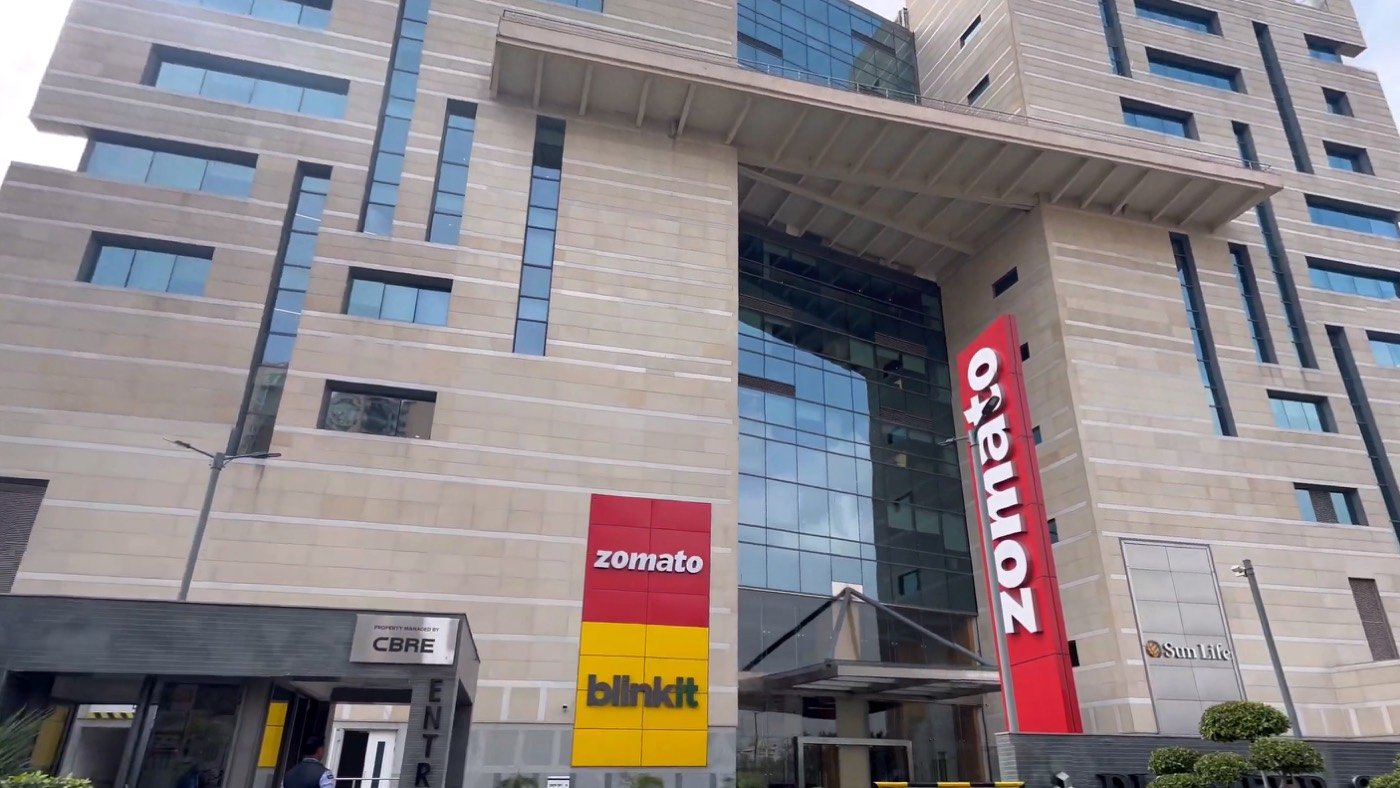
Zepto competes with Blinkit, Swiggy Instamart and Flipkart Minutes. Two of those three sit inside listed companies that report every quarter, which means their operating numbers are public, comparable and improving in view of the investors Zepto now has to win over. Blinkit’s parent has just reported a fifth consecutive quarter of adjusted EBITDA improvement and its chief executive has said publicly that the discounting war is close to over. Swiggy has said Instamart reached contribution breakeven, though it got there by shedding more than four million unprofitable users.
Every quarter Zepto stays private is a quarter its rivals spend building a public record against which it will eventually be priced. Waiting costs him that, and the cost is not small.
The judgement here is that Palicha did the disciplined thing rather than the flattering one, which in this cohort of founders is rarer than it should be. The open question is whether he can now do the harder thing. He has bought two or three quarters. The $7 billion number will still be in the file when he comes back, and the next number he prints will be read against it, not against $4 billion.
Sources
- The Hindu BusinessLine, on the pre-IPO placement, the $4 billion to $4.2 billion range, the $7 billion private mark, the $2.5 billion to $3 billion indicated by domestic mutual funds and the SEBI pre-IPO rule, 30 July 2026
- The Times of India, on Palicha telling staff the listing would slip by two to three quarters, 1 August 2026
- The Economic Times, on the pause and the pre-IPO round, August 2026
- Inc42, on Blinkit’s fifth consecutive quarter of adjusted EBITDA improvement, 22 July 2026