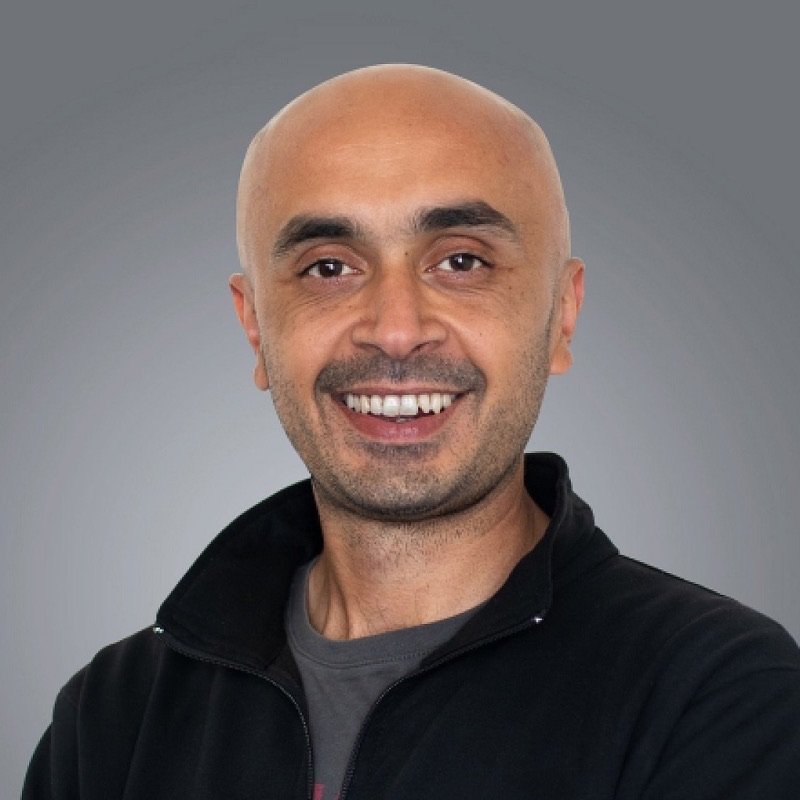
Sixteen days before a listed company named him its chief executive, the man he was replacing told a podcast audience that he had twice asked Albinder Dhindsa to quit.
On 5 January 2026, Deepinder Goyal described what happened after Zomato bought Blinkit. “Right after we acquired Blinkit, I asked him (Albinder) to leave. I told him, ‘You will not be able to cut it.’ He said okay. This happened twice during that timeframe, and we started the transition.” He presented it as a method rather than a falling out. He coaches, and when the coaching stops working he goes further. “I call this rock bottom, where I hurt people, their self-confidence completely goes for a toss. I do this with people who I think have insane potential, but something in their head is coming in their way.” By his own estimate it works four times in five.
On 21 January, Goyal resigned as managing director and chief executive of Eternal. In the same announcement he wrote to shareholders about the same man. “Blinkit’s journey from acquisition to breakeven happened under his leadership. He built the team, the culture, the supply chain, the operating rhythm. He has the DNA of a battle-hardened founder and his ability to execute far exceeds mine.”
Two verdicts on the same person, from the same person, sixteen days apart. Everybody drew the resilience lesson at the time. What actually sits between those two verdicts is a specific professional habit, and Dhindsa has now demonstrated it three times.
He keeps throwing away his own business model
Grofers began in December 2013, founded by Saurabh Kumar with Dhindsa, who had met him at the transport consultancy Cambridge Systematics in the late 2000s. Grofers was a hyperlocal marketplace, an app sitting between neighbourhood shops and their customers, and the cheapest possible way into Indian retail, because somebody else owns the stock and somebody else owns the shop. It did not work. By Fortune India’s account of the period, the model hit the realities of India’s fragmented supply chain and produced heavy losses and inconsistent service. Dhindsa rebuilt it as a full-stack operation with company-owned warehouses and its own inventory control.
The second rebuild is the one everybody remembers. In 2021 the company put dark stores across cities, promised delivery inside ten minutes, took a national beating over rider safety, and on 13 December 2021 stopped being Grofers at all. Seven years of brand equity in online grocery went in the bin in favour of a name that described a speed.
The third rebuild is the expensive one and it is still running. From the June 2025 quarter Blinkit started moving off the marketplace model and onto its own balance sheet, so that it buys and owns the goods it sells. By the December 2025 quarter about 90% of its net order value was own inventory. That single decision is why Eternal’s reported adjusted revenue grew 173% in the June 2026 quarter while the like-for-like number was 66%. It also turned a business that was deliberately asset-light into one carrying about 19 million square feet of store and warehouse space and roughly ₹3,000 crore of accumulated capital expenditure.
Three times he has declared his own previous answer wrong and paid to replace it. Founders who have raised money on a thesis usually defend the thesis instead.
The four crore rupees that got him the job
In the quarter to December 2025, Blinkit’s adjusted EBITDA turned positive for the first time. The figure was ₹4 crore, against a loss of ₹156 crore in the quarter before it. Asked in the shareholders’ letter what had caused it, Dhindsa listed supply chain cost efficiencies, a shift towards long tail categories and operating leverage, then added the part he cared about: “What may be surprising is that we achieved it despite elevated competitive intensity over the past few months.” Goyal answered the same question, and said the number was not manufactured. “The fact that we landed on the positive side was not the result of a last-minute push or a cost-cutting exercise… Breakeven happened as a consequence of those choices, not as a goal.”
₹4 crore does not count as money at this scale. It counts as a direction. Eternal published that quarter and announced the succession on the same day, 21 January 2026, and the board handed the group to the man whose business had just proved it could stop losing money.
The first full quarter, and the number that does not flatter
Dhindsa took the chief executive seat on 1 February 2026. The June 2026 quarter was his first complete one. Across Eternal’s consumer businesses net order value reached ₹31,120 crore, up 54% on the year. Blinkit’s share of that was ₹17,132 crore, up 86%, with 200 net new stores taking the count to 2,443 and adjusted EBITDA of ₹102 crore against a ₹162 crore loss a year earlier. Food delivery, the older business, produced ₹606 crore of adjusted EBITDA on ₹10,769 crore of order value.
Set against that, the group’s reported profit for the quarter was ₹92 crore. Not ₹92 crore of adjusted anything: ₹92 crore of profit for the period, down 47% on the March quarter, because the carried-forward losses that had sheltered Eternal from tax were finally used up and ₹180 crore went to the government. A company moving ₹31,120 crore of goods and services in three months kept about ₹3 of every ₹1,000 of it.
The other unflattering number is in his own capital model. A year ago Eternal told investors a Blinkit store cost about ₹1 crore to build. After twelve months of running the inventory model it revised that to ₹2.5 crore, which is two and a half times the original assumption, and raised the daily order value it expects per store from ₹7 lakh to ₹11 lakh to match. The return still works on their arithmetic. The point is that the arithmetic changed by that much, in one year, on the business he has run for a decade.
The seat he actually holds
He is chief executive of Eternal and he is not a director of it. The board is Kaushik Dutta as chairman, four other non-executive and independent directors, and Deepinder Goyal, who returned on 13 March 2026 as vice chairman and non-executive director on a five-year term. Dhindsa’s only board seat inside the group is at Blink Commerce, the Blinkit subsidiary, where he remains a whole-time director. He also still runs Blinkit itself, which the company’s own senior management table records as a second job rather than a former one.
He waived his salary from 1 February 2026, the day he started. His remuneration for the financial year is recorded as nil. That reads better than it is: Goyal had waived his own from April 2021 and the chief financial officer Akshant Goyal from January 2022, so this is the house convention and Dhindsa signed up to it rather than inventing it.
What he is actually being paid in, and what it costs
The organisation underneath him is churning hard. Eternal’s own annual report puts permanent employee attrition at 54.02% for the year to March 2026, against 44.33% the year before, and at 65.30% for women. Median pay rose 27.25%, which the company attributes plainly to “ongoing automation and workforce optimization… More and more routine, lower-complexity roles were automated or restructured”. Both facts are the company’s, published in the same document that records his nil salary.
There is a coherent story in which all of this is fine, and Dhindsa tells it clearly. On the July earnings call he said the June quarter “so far, was the peak of competitive intensity that we have seen” and that rivals buying customers with discounts cannot keep them once the discounts stop. His alternative is infrastructure: more stores, deeper assortment, own inventory, and the efficiency that comes with all three. He has made the same argument at every stage of the business, and it is why he keeps rebuilding rather than defending.
The bet you can grade
Blinkit has told the market it will reach 3,000 stores by March 2027, and said that if competitive intensity eased it would rather aim at 3,500 to 4,000. It closed June at 2,443. That leaves 557 stores in three quarters on the conservative version of his own guidance, at ₹2.5 crore of capital each, in a business whose group profit is currently ₹92 crore a quarter.
If he clears it, the man who was twice told he could not cut it will have been right about the only thing he has ever really argued: that in this business you win by owning the expensive part. If he does not, the person who has to explain the shortfall is a chief executive with no board seat, sitting one rung below the founder who hired him, fired him twice in his own telling, and then gave him the company.
The record
Sources
- Eternal Limited, transcript of the Q1FY27 earnings call of 22 July 2026, listing Albinder Singh Dhindsa as Chief Executive Officer, Eternal Limited, and carrying his “peak of competitive intensity” remark, filed to the exchanges 29 July 2026
- Eternal Limited, shareholders’ letter and results for the quarter ended 30 June 2026, 22 July 2026, for net order value, store count, adjusted EBITDA, the revised capex and store economics, and the ₹92 crore profit for the period
- Eternal Limited, shareholders’ letter for the quarter ended 31 December 2025, for Blinkit’s first positive adjusted EBITDA of ₹4 crore, the ₹156 crore loss before it, the 90% own-inventory share and the 3,000-store guidance
- Eternal Limited, Annual Report 2025-26, for the appointment effective 1 February 2026, the waived salary, the senior management table, employee attrition and the median pay disclosure
- Eternal Limited, board composition, checked 26 August 2026
- Moneycontrol, Asked Blinkit CEO Albinder Dhindsa to step down twice after acquisition, says Eternal CEO Deepinder Goyal, 5 January 2026, reporting Goyal’s remarks on the Raj Shamani podcast and the ₹4,447 crore acquisition price
- Mint, Eternal CEO Deepinder Goyal resigns, Blinkit’s Albinder Singh Dhindsa to take charge, 21 January 2026, carrying the “battle-hardened founder” passage from the letter to shareholders
- Fortune India, Meet Albinder Dhindsa, Blinkit’s founder and Eternal’s incoming CEO, by Urvashi Mishra, 21 January 2026, for the early career, the failure of the original marketplace model and the full-stack rebuild
- Mint, 5 things to know about Blinkit’s Albinder Singh Dhindsa, 21 January 2026, for the dated career chronology
- The Economic Times, Grofers founder responds to criticism of 10-minute grocery delivery, August 2021
Questions people ask about Albinder Dhindsa
Who is Albinder Dhindsa?
Albinder Dhindsa is the Chief Executive Officer of Eternal Limited, the parent of Zomato and Blinkit, appointed with effect from 1 February 2026. He co-founded Grofers in December 2013, rebuilt it as Blinkit in 2021, and remains founder and chief executive of Blinkit.
Who did Albinder Dhindsa replace at Eternal?
Deepinder Goyal, who founded Zomato and resigned as director, managing director and chief executive of Eternal at the close of business on 1 February 2026. Goyal returned on 13 March 2026 as vice chairman and non-executive director on a five-year term.
What did Albinder Dhindsa do before Blinkit?
He took a BTech at IIT Delhi and an MBA at Columbia Business School. He worked as a transportation analyst at URS Corporation and then at Cambridge Systematics, where he met his future co-founder Saurabh Kumar, and was head of international operations at Zomato before going full time at Grofers in 2014.
How is Blinkit performing under Albinder Dhindsa?
In the quarter to 30 June 2026 Blinkit reported net order value of Rs 17,132 crore, up 86% year on year, across 2,443 stores, and adjusted EBITDA of Rs 102 crore against a loss of Rs 162 crore a year earlier. Eternal’s reported profit for that quarter was Rs 92 crore.