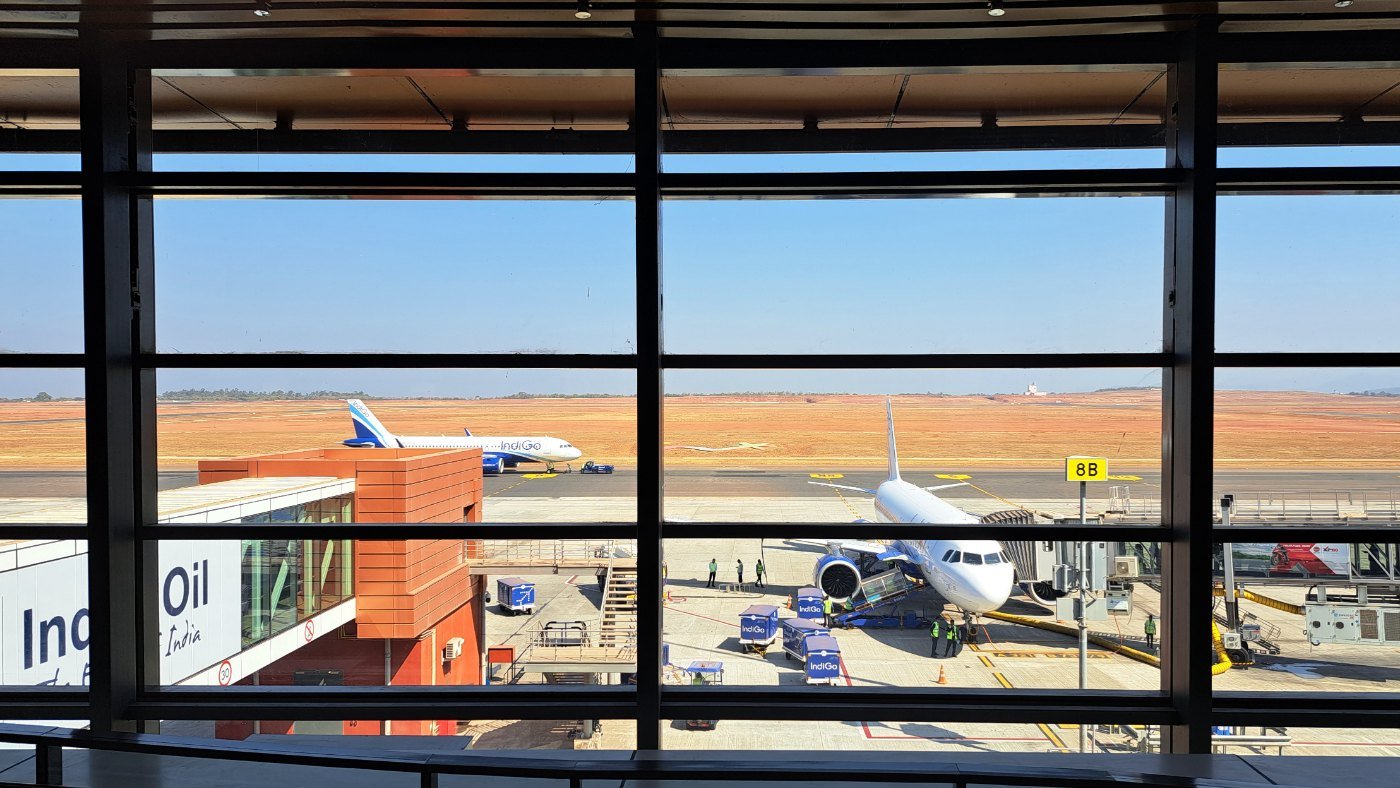
For five years Willie Walsh’s job was to tell governments and airports what airlines needed. On 3 August he took a job where the complaints arrive addressed to him.
Walsh, 64, finished his term as director general of the International Air Transport Association on 31 July and started as chief executive of IndiGo three days later. He ran Aer Lingus, then British Airways, then IAG. He has never run an Indian airline, and he arrives at the one that carries roughly two-thirds of India’s domestic passengers.
The exit nobody explained
Pieter Elbers resigned on 10 March 2026 and was relieved at the close of business the same day, with his notice period waived at his own request. InterGlobe Aviation’s filing recorded the resignation and nothing else. Elbers cited personal reasons. Rahul Bhatia, the founder and managing director, took interim charge that afternoon.
What sat behind it is on the public record even though it was never in the filing. In the first half of December 2025 IndiGo cancelled more than 4,000 flights after failing to staff itself under stricter pilot fatigue rules, an operational collapse that drew a ₹22.20 crore penalty from the DGCA, show-cause notices to senior management including Elbers, a Competition Commission inquiry and a reported financial hit of about ₹2,000 crore. Reuters, reporting Walsh’s appointment three weeks later, described Elbers as having left “following a scheduling meltdown that halted travel and drew regulatory scrutiny.” Bhatia was blunter in an internal note to staff: what happened in December “should never have taken place.”
Two quarters of losses
IndiGo reported a consolidated net loss of ₹238 crore for the quarter to June 2026, against a profit of ₹2,176 crore in the same quarter a year earlier. Revenue from operations grew 20% to ₹24,584 crore. The gap between those two facts is fuel: the aviation turbine fuel bill reached ₹10,833 crore, alongside adverse currency movement and disruption from the conflict in West Asia.
That made two straight quarterly losses, after ₹2,537 crore in the March quarter. An airline that spent a decade as the most reliably profitable business in Indian aviation has now lost money twice running, and it did so before Walsh sat down.
The case against
The case is not that he lacks a record, only that his record is in advocacy and in consolidation, and IndiGo’s problem is neither. On his first day he told employees that the airline’s strongest days were ahead, despite supply chain constraints and airspace disruption. Saying so is right, and it describes the easier half of the job. IndiGo’s domestic dominance is not in question. Its ability to fly long-haul profitably against Emirates, Qatar Airways and a rebuilding Air India has never been tested at scale, and that is the half he was hired for.
He has already made the argument he will now be judged on. As IATA’s director general he told the BBC that India, a country of 1.4 billion people, has roughly 50 widebody aircraft, and called it a scandal. IndiGo has 60 Airbus A350s on order. The scandal is now his delivery schedule.
Rahul Bhatia said Walsh’s global experience “will be instrumental as IndiGo accelerates its international expansion strategy.” Founders do not hire outsiders of this profile unless the answer inside the building has already been tried. Two of India’s largest airlines changed chief executive in 2026, both replacing a departing foreign executive with another foreign executive, and both are losing money. Whatever else this year turns out to have been, it is the year Indian aviation decided the answer was not in the building.
Sources
- Reuters, on the appointment and its connection to the December meltdown, 31 March 2026
- The New Indian Express, quoting InterGlobe Aviation’s filing, the DGCA penalty and Rahul Bhatia’s note to staff, 10 March 2026
- BBC, on Pieter Elbers’ resignation, 11 March 2026
- Mint, on the Q1 FY27 loss, the fuel bill and the second straight quarterly loss, 23 July 2026
- The Economic Times, on the Q1 FY27 results, 23 July 2026
- Forbes India, on both airline appointments in the same week, 7 August 2026
- Leaders to Watch, on Air India’s own change of chief executive